Any travel agent can issue a ticket or book a cruise . . . We create Travel Experiences . . . that extra effort is our hallmark!
One of the fascinating things about going to Fiji is learning about their culture and customs. On Vitu Levu there are two cultural centers that you can go to to learn about the history and customs
of Fiji. Some of the pictures below were taken at Kalevu Cultural Center in
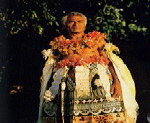
Society centered around the extended family and families lived together in villages which were headed by a hereditary chief (photo on the left).
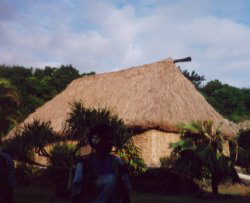
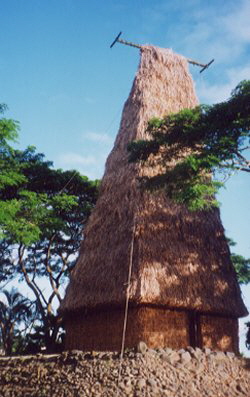
The village chief was polygamous and intermarried. The village consisted of bures, which are thatched roof huts as seen below. These photos of bures are part of the Kalevu Cultural Center. The tall bure is the priest's bure and the smaller one is where a family lived or where they did their cooking or stored their weapons.
There was fierce rivalry between villages and as a result many different weapons were created.
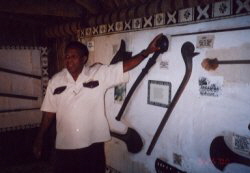
Below is a picture of Coconut, the tour guide at Kalevu, showing the group the weapons used by the early Fijians. Replicas of these are now sold as souvenirs.
As in years past, outside of the main cities, the Fijians still live in villages along the rivers or coast, with 50 to 400 people led by a hereditary chief.
The traditional thatched roof bure has been replaced by buildings of tin and panel. They still work the communal land individually and grow most of their own food. One of the highlights of any trip to Fiji is a visit to a Fijian village
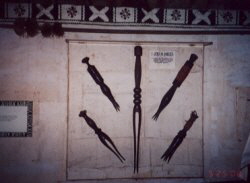
The early Fijians were cannibals and here are some samples of brain forks used to consume their enemies.
It was thought that by eating the defeated enemy you would incorporate their power into yourself.